Language
 Default Store View
Default Store View
Default Store View
1. What Is A Paper Clip?
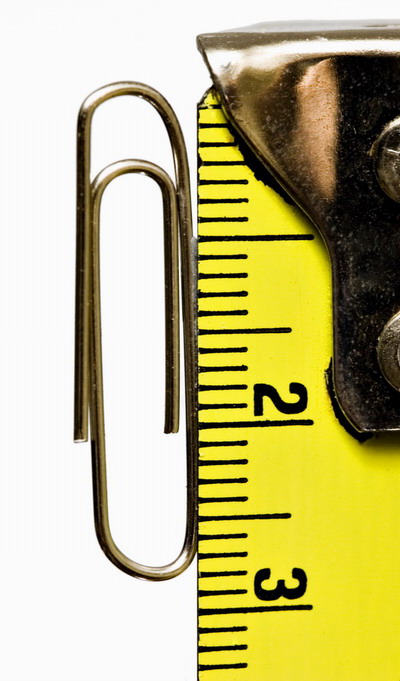


The classic paper clip is formed from a continuous piece of thin wire bent into a looped shape. Although many early designs were never patented, the most successful version — the Gem paper clip — first appeared in the 1890s. The Gem Manufacturing Company began producing these wire paper clips around 1892, with the earliest known advertisement appearing in 1893. By 1904, the “Gem” name had become a registered trademark in the United States.
A common myth claims that the famous philosopher Herbert Spencer invented the paper clip, but historical records show the device was already in widespread use by the late 1890s. In 1899, William Middlebrook received a patent for a machine that could mass-produce the now-iconic Gem-style paper clip.
Today, our collections feature not only traditional designs but also countless custom paper clips and shaped paper clips in creative themes such as animals, vehicles, landmarks, symbols, and more.


While the traditional paper clip is made from round or flattened wire, modern manufacturing offers far greater variety. We produce wire paper clips in different thicknesses (1.0mm to 1.5mm and more) and can apply plastic coatings in any color. For premium options, we offer electroplating in silver, gold, rose gold, and multi-tone finishes according to customer specifications.
Beyond standard wire designs, we also create custom paper clips, shaped paper clips, decorative binder clips, printed logo clips, and many other specialized styles to meet diverse creative and branding needs.
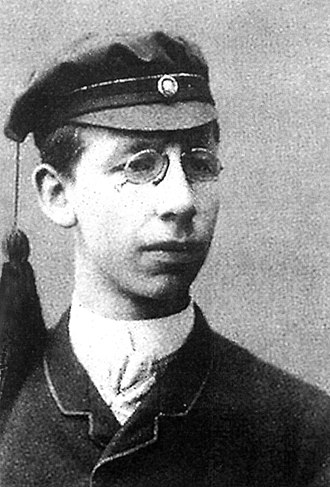
A Norwegian inventor named Johan Vaaler received patents in Germany (1899) and the United States (1901) for a different paper clip design. After his death, a myth developed in Norway claiming he had invented the modern paper clip. This story was later promoted in Norwegian encyclopedias and became part of national folklore, even though Vaaler’s design was never as successful or widely used as the Gem paper clip.
During World War II, Norwegians wore paper clips on their clothing as a quiet symbol of resistance against Nazi occupation. The simple paper clip came to represent unity, patriotism, and defiance when open protest was dangerous. This powerful symbolic meaning helped strengthen the myth of Norwegian invention in the postwar years.
1. What Is A Paper Clip?
The classic paper clip is formed from a continuous piece of thin wire bent into a distinctive looped shape. Although many early designs were never patented, the iconic “Gem” paper clip emerged in the early 1890s and quickly became the worldwide standard. The Gem Manufacturing Company began production around 1892, with the first known advertisements appearing in 1893. By 1904, “Gem” had become a registered trademark in the United States.
Contrary to popular legend, the philosopher Herbert Spencer did not invent the paper clip. Historical evidence shows that various types of paper clips were already in common use by the late 1890s. In 1899, William Middlebrook patented a machine that enabled the mass production of the now-famous Gem-style paper clip.
Today, we offer not only traditional designs but also hundreds of creative custom paper clips and shaped paper clips in themes ranging from animals and landmarks to symbols and logos.
While the traditional paper clip is made from round or flattened metal wire, today’s options are much more diverse. We produce wire paper clips in various thicknesses (1.0mm to 1.5mm and above) and can apply plastic coatings in almost any color. Premium finishes include silver, gold, rose gold plating, and custom Pantone matching.
Beyond standard wire designs, we specialize in custom paper clips, shaped paper clips, decorative binder clips, printed logo clips, metal hinge clips, and many other unique styles to meet different functional and branding requirements.
Johan Vaaler, a Norwegian inventor, received patents in Germany (1899) and the United States (1901) for a paper clip design that was different from the popular Gem style. After his death, a myth gradually developed in Norway claiming he had invented the modern paper clip. This story was later included in many Norwegian encyclopedias and became part of national folklore, although Vaaler’s design was never as practical or widely adopted as the Gem paper clip.
During World War II, Norwegians began wearing ordinary paper clips on their clothing as a subtle but powerful symbol of resistance against Nazi occupation. At a time when open protest was dangerous, the simple paper clip came to represent national unity, solidarity, and quiet defiance. This symbolic role helped strengthen the myth of Norwegian invention after the war.
| Image | Brand Name / Other Names Dates |
Additional Information |
 |
Fay Paper Clip Also known as Clinch, Chicago, Cinch Patented 1867 Advertised 1896–1961 |
Originally designed as a ticket fastener for fabric, this clip was later widely adopted for holding papers together. X |
 |
Wright Paper Clip Patented 1877 Advertised c. 1877 |
Designed primarily for fastening newspapers and documents instead of using pins or sewing. |
 |
Angell Paper Clip Patented 1889 |
Also known as a book-leaf holder, it was used to keep letters and checks together securely. X |
 |
Utility Paper Clip Patented 1895 Advertised 1890–1900 |
Made from sheet metal by O. W. Smith Manufacturing Co. and later Stationers' Mfg. Co. X |
 |
Gem Paper Clip Not Patented Advertised 1893–Present |
The most successful and widely recognized paper clip in history. Cushman & Denison registered the “Gem” trademark in 1904. X |
 |
Patent Spring Clasps Advertised 1893–1900 |
Distributed by Library Bureau. Claimed to largely replace pins, staples, and rubber bands. X |
 |
Eureka Clip / Farmer Patented 1894 Advertised 1897–1930 |
Made from sheet metal by Consolidated Safety Pin Co. X |
 |
Niagara Paper Clip Patented 1897 Advertised 1897–1950 |
Produced by Niagara Clip Co., New York. Also available in a larger “Giant” version. X |
 |
Simplex Clip Patented 1897 |
Could securely hold up to twenty sheets of paper. |
 |
Perfection Paper Fastener Patented 1898 |
Produced by M. P. & J. R. Schooley. X |
 |
Vaaler Paper Clip Patented 1900 (Germany), 1901 (US) |
Norwegian inventor Johan Vaaler’s design. Although often credited in Norway, it was never as successful as the Gem clip. |
Besides holding papers, the versatile paper clip has many creative everyday applications. Its flexible metal wire can be used to reset electronic devices, clean small crevices, fix zippers, or serve as a temporary bookmark. At CustomPaperClips.com, we offer hundreds of beautiful custom paper clips and decorative paper clips designed for both practical use and collectible appeal.
Beyond holding papers, the humble paper clip has many creative applications. Its flexible metal wire makes it useful for resetting electronic devices, cleaning small spaces, or even as a temporary zipper pull. In our collections, you will find hundreds of custom paper clips and decorative paper clips designed for both practical use and collectible appeal.
 German View
 French View
 Japanese View